The City of Cape Town’s long-term programme to restore the Milnerton Lagoon is delivering positive results, largely due to continued investment in sewer and wastewater infrastructure across the wider Diep River catchment. Recent monitoring shows improved water quality indicators within the lagoon.
At a public meeting on 24 June 2026, the City updated residents on the progress of the restoration programme, outlining the long-term phased approach to infrastructure investment and environmental rehabilitation.
Recent winter rainfall, together with recovering estuary conditions, has increased dissolved oxygen levels and seen salinity and sediment levels improve within the lagoon.
‘The return of marine life to the catchment area has been a welcome development, with the recent capture of a Southern Mullet high up the Diep River. The presence of this species so far upstream points to better oxygen levels and improving water quality. Although an early milestone in what is expected to be a long-term restoration journey, it is an undeniably positive sign that conditions within the Milnerton Lagoon and river system are changing.’
‘Simultaneously, Potsdam Wastewater Treatment Works (WWTW) has recently achieved two consecutive weeks of 100% compliance across all measured final effluent quality parameters,’ said Councillor Zahid Badroodien, Mayoral Committee Member for Water and Sanitation.
Sustained compliance with licence parameters is anticipated once all new infrastructure has been commissioned.
Lagoon restoration and dredging
Environmental authorisation for dredging has been granted; however, eight appeals have been lodged against the authorisation. The City and the provincial environmental authority are responding to the appeals, with a decision expected later this year. The dredging procurement process will resume once the appeals process has been concluded, with dredging expected to commence during early 2027 should the authorisation be upheld. Project planning for the saline water ingress intervention has been completed, with implementation dependent on the issuing of a Section 28 directive.
Sewer network upgrades and maintenance
Preventative maintenance remains a key focus, with more than 31 kilometres of sewer pipelines proactively cleaned across the catchment during the 2025/26 financial year. Rehabilitation projects continue across Milnerton, Century City and Montague Gardens to improve network reliability, reduce blockages and extend the lifespan of ageing infrastructure.
Pump station monitoring
Telemetry provides real-time monitoring at all 56 pump stations within the Potsdam catchment, enabling faster fault detection and improved operational response. Preventative inspections, scheduled wet well cleaning and the establishment of critical spare component stores further strengthen operational resilience.
Pump station upgrades:
- Koeberg Road Pump Station: The commissioned sand trap and screening facility contain overflows, reducing environmental spill risks while procurement progresses for the new high-capacity replacement pump station.
- Du Noon Pump Station: Screen upgrades and overflow improvements remain on track for completion during October 2026.
- Phoenix Pump Station: Conceptual design has progressed, with investigations and environmental processes continuing ahead of the planned construction phase.
- Table View East Pump Station: The overflow pond has been recommissioned, while the installation of a basket screen and fourth standby pump is progressing ahead of the larger pump station upgrade.
- Sanddrift East Pump Station: Planning continues for the major upgrade that will further improve system resilience within the catchment.
Recent emergency response
During June 2026, the City responded to a collapse on the Racecourse Pump Station rising main. Immediate mitigation measures, including vacuum tankers and manual operation of the pump station, were implemented before repairs were completed within two days, limiting environmental impacts.
Potsdam Wastewater Treatment Works upgrade
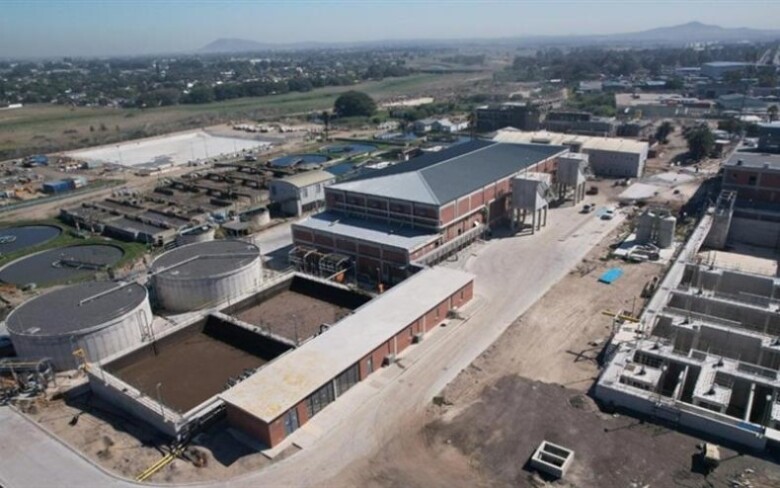
- The Potsdam WWTW recently achieved two consecutive weeks of 100% compliance across all measured final effluent quality parameters, marking a significant milestone in improving the quality of treated wastewater discharged from the facility. The overall compliance performance is, however, expected to still vary while construction and related activities are still underway, and sustained compliance with licence parameters is expected once all new infrastructure has been commissioned and is working together as one treatment system.
- Ultrafiltration facilities have entered trial operation, with handover to operational staff under way.
- Dewatering facilities are operational, and staff training is progressing.
- Mechanical and electrical installations continue across the treatment works, with commissioning of additional process units planned during 2026.
- The upgrade will significantly improve nutrient removal, effluent quality and the long-term environmental performance of the treatment works.
Air quality improvements
Ambient air quality monitoring continues to show encouraging trends. Since monitoring commenced in February 2025, the World Health Organisation’s daily health guideline for hydrogen sulphide has not been exceeded. While nuisance-related odour guideline exceedances occurred frequently during 2025, the frequency has reduced significantly during 2026, reflecting improved wastewater management and reduced pollution incidents. Continued improvements in wastewater treatment and sewer system performance are expected to further reduce odour impacts.
“While there is still important work ahead, the improvements that we are seeing demonstrate that our integrated approach is delivering results. The combination of proactive maintenance, major infrastructure investment, environmental monitoring and long-term rehabilitation will continue to improve the health and resilience of the Milnerton Lagoon and the broader Diep River catchment for years to come,” said Councillor Badroodien.