While South Africa’s infrastructure crisis is dominating headlines and conversations around the country, in the global municipal engineering community, South Africa is holding its own as a world-class champion of infrastructure excellence. This was underscored at the 2026 International Federation of Municipal Engineering (IFME) World Congress, which was held under the theme “Future Liveable Cities”. South Africa stood front and centre alongside our IFME counterparts.
A Gold for South Africa
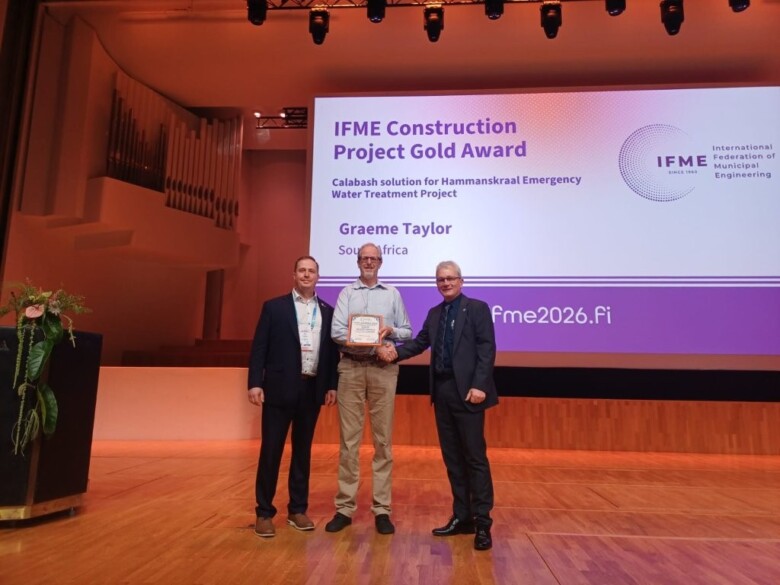
A conference highlight was the prestigious IFME Awards ceremony. Entries are judged in two categories: Construction or Development projects. Competing in a highly competitive field, South African engineering company Tecroveer won the IFME Gold Award in the Construction projects category for its entry entitled, “Calabash solution for Hammanskraal Emergency Water Treatment Project”.
Partnership between government and the private sector
The conference opening session set the tone for the whole event, with remarks delivered by Sari Multala, Finland’s Minister of Climate and the Environment, and Eveliina Heinäluoma, Chairman of the Helsinki City Council. The key message was the role of infrastructure in positively impacting the lives and livelihoods of global citizens as a collective partnership between government and the private sector. This was reflected in all the ensuing keynote addresses and presentations by leading Finnish and international academics, social scientists, municipal engineers, architects and allied built environment practitioners, all dedicated to advancing enabling infrastructure delivery.
A major emphasis was placed on the responsibility of urban designers, scientists and engineers to develop social and physical infrastructure solutions that prioritise both form and function for future generations. In other words, aesthetic elements are key, whether it’s a community centre or a Bus Rapid Transit system. Nature-based elements and urban biodiversity must always be seamlessly integrated.
In South Africa, these considerations are all fundamental in closing inequality gaps and truly transitioning affected communities still experiencing the legacy of apartheid town and city planning. That includes sustainable housing close to employment opportunities, and safe and affordable public transport.
Converted landfill sites
At the end of the conference, delegates had the opportunity to visit neighbouring countries to experience first-hand how their definition of liveable cities works. I joined the group visiting Bergen and Stockholm, and it was an eye-opening experience. Landmark projects visited included brownfield industrial and landfill sites that have been converted into vibrant commercial and residential nodes, with a strong focus on natural landscaping. In fact, these cities place major emphasis on protecting green urban spaces that promote community recreation.
In this respect, Bergen was the standout example of innovative citizen-centric projects. From a waste management perspective, the city has installed waste recycling disposal points (accessed via key tags) that drop down into an extensive underground waste pipe collection system. This feeds through to a central collection point where any recoverable materials are separated for downstream processing. In addition to facilitating a circular economy, cost savings are achieved through a marked reduction in waste truck utilisation.
The world’s longest pedestrian and bicycle tunnel
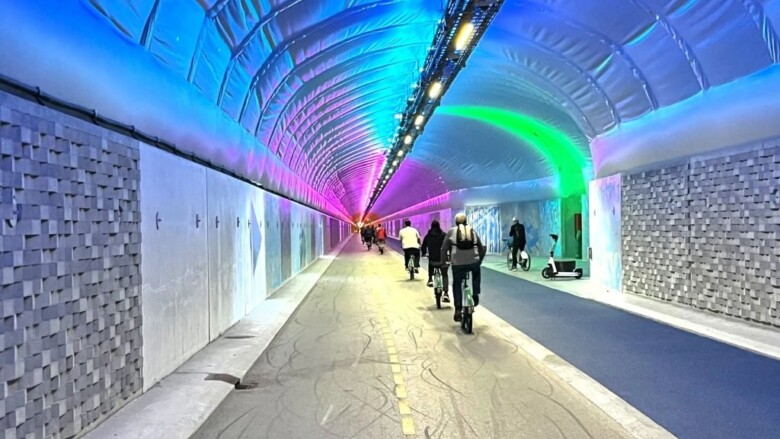
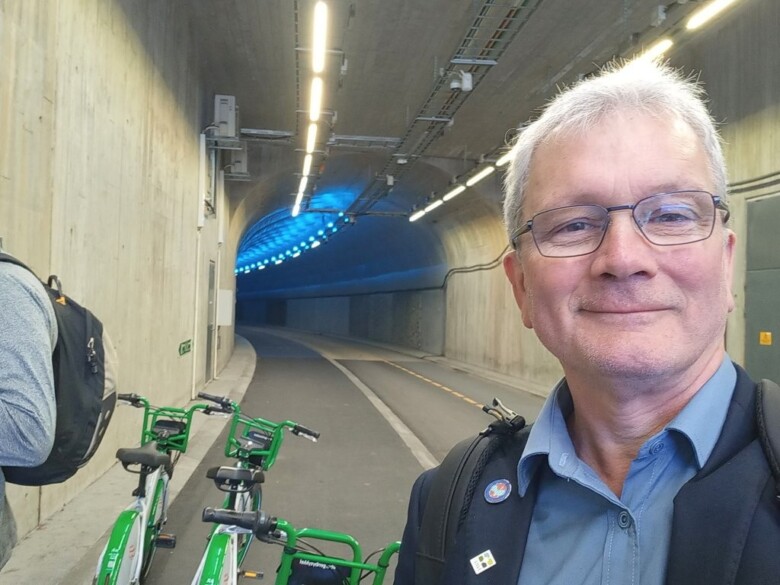
Bergen is also home to the world’s longest pedestrian and bicycle tunnel, measuring 3 km in length and tunnelled through a mountainous section connecting two parts of the city. Inside, the distinctive coloured lighting creates the impression of movement, and it underscores the proactive measures by Bergen’s public officials and engineers to add value wherever practical.
Ultimately, the major takeaway from the conference was the power of infrastructure to change community commitment and behaviour for the better. Essentially, happy citizens are engaged citizens, and that’s a core priority for us to focus on in South Africa.
Geoff Tooley is the president of the Institute of Municipal Engineering of Southern Africa (IMESA) and a Professional Civil Engineer with more than three decades of experience in infrastructure engineering, including stormwater and catchment management for eThekwini Municipality.
About IMESA
Since 1961, the Institute of Municipal Engineering of Southern Africa (IMESA) has been committed to the pursuit of excellence in all facets of infrastructure, pushing boundaries and driving innovation. Our unwavering dedication extends to the professionals who form the backbone of this industry.
IMESA creates a platform for the exchange of ideas and viewpoints on all aspects of municipal engineering with the aim of expanding the knowledge and best practices in all local government municipalities. This is made up of a community of pioneers, professionals and enthusiasts united by a singular purpose: to reshape the landscape of infrastructure engineering.
Opinion piece by Geoff Tooley, president of the Institute of Municipal Engineering of Southern Africa (IMESA), who attended the recent International Federation of Municipal Engineering (IFME) World Congress in Helsinki, Finland, on behalf of IMESA.