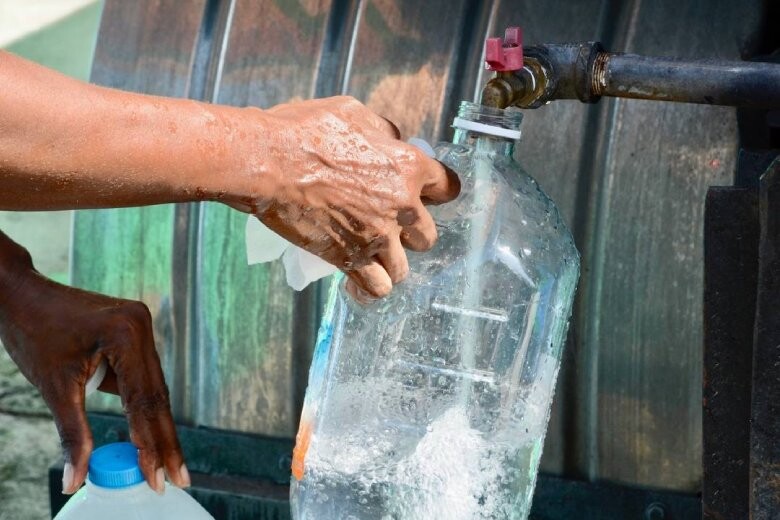
As South Africa’s water crisis reaches a breaking point, President Cyril Ramaphosa has published the National Water Action Plan (NWAP), outlining strategic interventions to reverse the significant deterioration in water supply and quality over the short, medium and long term.
The release of the plan followed a meeting of the National Water Crisis Committee (WATERCOM) in Pretoria on Thursday.
WATERCOM, chaired by Ramaphosa and comprising a range of government departments and public agencies, as well as the South African Local Government Association (SALGA), was established following the 2026 State of the Nation Address in February in response to the increasingly severe water supply interruptions in several parts of the country.
The plan, developed by WATERCOM, sets out a focused, programmatic series of actions to ensure a reliable supply of quality water to all South Africans, aiming to address the root causes of the water supply challenges in many municipalities.
Informed by extensive consultation with stakeholders across all three spheres of government – national, provincial and local – and associations such as Salga, the NWAP outlines a strategy to increase investment in infrastructure, including through private sector investment; implement legal and regulatory reforms to improve municipal service delivery; and address corruption and criminality in the water sector.
With priority interventions designed to establish new foundations for sustainable water service delivery, dedicated teams have been mandated to drive implementation, accelerate results and catalyse long-term reform.
WATERCOM will meet regularly to oversee the implementation of the plan and to hold the responsible departments and agencies accountable for delivery.
“By acting boldly and decisively to improve the performance of Eskom and reform our energy system, we were able to end loadshedding and achieve a secure and reliable energy supply. Now, we are applying the same approach to the water crisis that has been unfolding in many parts of our country. The NWAP outlines a clear, practical and focused approach to ensure water security for all South Africans, no matter where they live,” said Ramaphosa.
“Too many municipalities, communities and businesses can no longer rely on safe, reliable water services, threatening public health, economic activity and social stability. The scale of the challenge now demands urgent national action and a fundamental shift in how water services are restored and managed.”
Five Interventions
Based on five areas of intervention, each with dedicated teams and clear priorities, the plan highlighted the need to act on two fronts, namely working with municipalities to resolve the immediate crises and changing the system to deliver water services for lasting results.
According to the plan, some actions will yield results within months, while others are longer-term reforms that will take time to fully deliver.
“While these challenges cannot be resolved overnight, continuing with outdated approaches is no longer an option.”
The five areas of intervention include addressing challenges in municipal water and sanitation delivery, through which most South Africans receive water; expediting reforms to address the systemic causes of the water crisis; increasing investment in infrastructure, including through private sector investment; exploring legal and regulatory mechanisms to improve municipal service delivery; and addressing corruption and criminality in the water sector.
Key Partners
WATERCOM is working with municipalities to mobilise resources, expertise and new partnerships to stabilise failing systems, recover critical services and expand access across the country.
This will ensure a coordinated approach to the institutional and financing reforms necessary to achieve water security, including ring-fencing water revenues to ensure adequate maintenance of water assets and increasing investment in bulk water and distribution infrastructure.
In doing so, it will build on the work already being done by the Department of Water and Sanitation (DWS), the Department of Cooperative Governance and Traditional Affairs and the National Treasury, among others, to address the challenges in the water sector.
The NWAP identifies the root cause of the crisis as an inappropriate delivery model for water services, characterised by the absence of ring-fencing as water revenues are often used to fund other municipal functions, reducing the resources available for water infrastructure maintenance, investment and hiring skilled staff.
In addition, diffused accountability weakens incentives for effective and financially sustainable water management and service delivery as municipal water and sanitation departments are typically responsible for technical functions but have limited control over billing, revenue collection and asset protection.
National government is already decisively intervening where municipalities are failing and is accelerating support where it is needed most.
“Coordinating mechanisms to drive implementation of this plan have been established at the level of the Presidency, and technical support teams have been mobilised with priority municipalities identified for immediate intervention.”
Other immediate priority actions include unlocking infrastructure investment and delivery, with the DWS developing a pipeline of projects for private sector participation, with at least three projects to be brought to market before the end of the year.
The National Treasury is also establishing the Infrastructure Finance and Implementation Support Agency to collaborate with the Water Partnerships Office and project sponsors to structure projects for greater private sector participation.
To strengthen governance and accountability, the Presidency is reviewing and providing amendments to the legislation for national government intervention in failing municipalities.
The DWS and National Treasury are developing budgeting requirements and incentives to ensure that water revenues are ring-fenced and reinvested into water services.
Further, to accelerate regulatory and institutional reform, the DWS is finalising amendments to the Water Services Act, appointing the board and CEO of the National Water Resource Infrastructure Agency and drafting legislation to establish an independent water regulator, which brings greater oversight and accountability to the sector.
Together, these immediate actions exemplify the prioritisation, decisiveness and commitment that are required for change, and lay some fundamental groundwork for the plan’s five areas of focus.
“Resolving the water crisis is complex and will require strong commitment and close cooperation between political and administrative leaders across all spheres of government,” the plan pointed out.
“Success will depend on a willingness to embrace new solutions and remove unnecessary bureaucratic obstacles. WATERCOM will provide a central platform to coordinate the many stakeholders involved, track progress in real time and maintain a sense of urgency. Failure is not an option.”